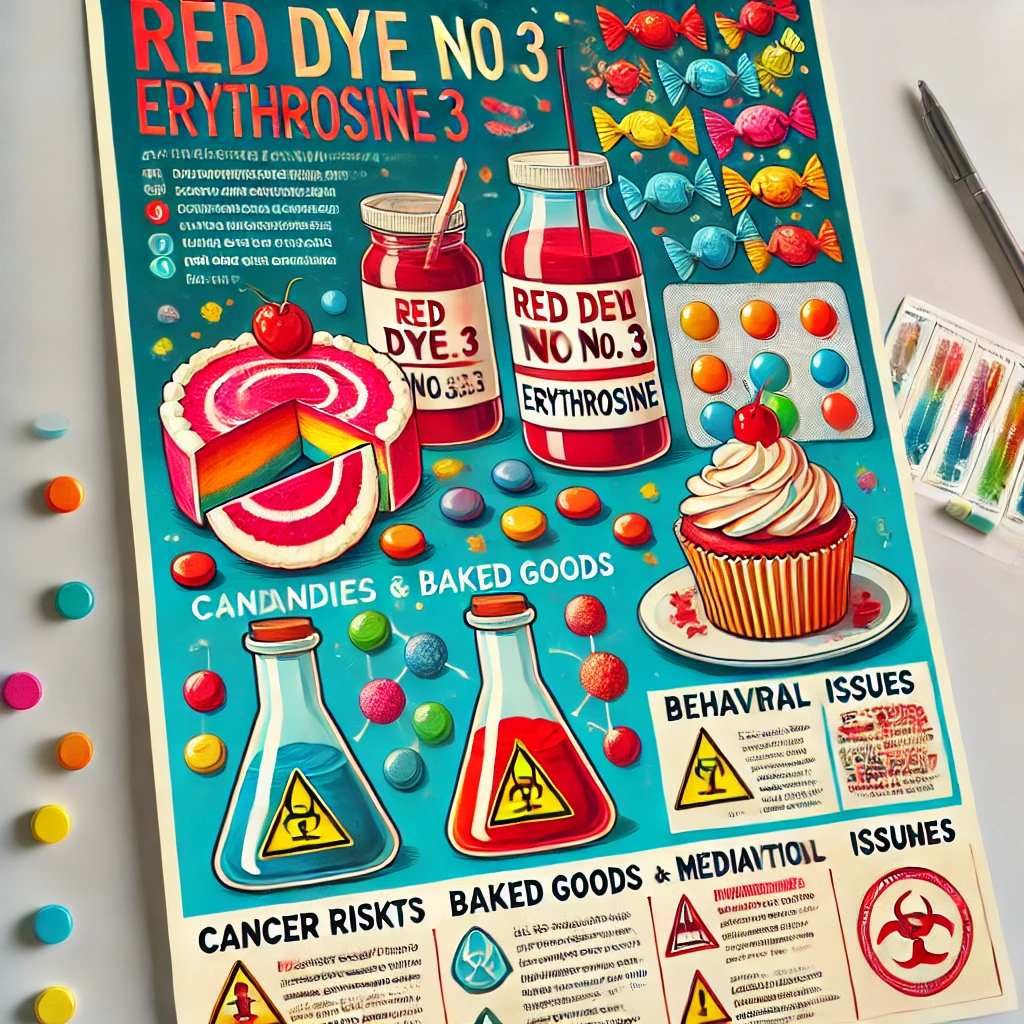
🗣️FINALLY! The U.S. Food and Drug Administration (FDA) has announced a ban on Red Dye No. 3, also known as Erythrosine, from foods, dietary supplements, and ingested drugs due to its association with cancer in animal studies. A 2022 petition by food safety and health advocates and is guided by the Delaney Clause, which mandates the banning of any carcinogenic substances.
The United States government has known since the 1980s that Erythrosine (Red Dye No. 3) is a carcinogen and causes cancer in animals. Year after year, food safety and health advocates, such as the Center for Science in the Public Interest (CSPI), the Center for Food Safety (CFS), and the Consumer Federation of America (CFA), have worked tirelessly to promote and advocate for safer and healthier food. These organizations push for policies to eliminate dangerous pathogens, control allergens, and reduce the use of synthetic additives, including Red Dye No. 3.
Health Concerns and Effects
Studies have shown that high doses of Red Dye No. 3 caused cancer in male lab rats, leading to concerns about its safety in human consumption. Although there is no conclusive evidence directly linking the dye to cancer in humans, the FDA’s decision aligns with the Delaney Clause, which prohibits additives found to cause cancer in animals or humans at any dose.
Affected Foods and Products
Red Dye No. 3 has been widely used to impart a red or pink color to various foods and products. Common items containing this dye include:
Candies: Such as candy corn and other brightly colored sweets.
Baked Goods: Including cakes, cookies, and frostings.
Snack Foods: Like certain flavored chips and processed snacks.
Beverages: Fruit-flavored drinks and some sodas.
Processed Fruits: Including preserved cherries and other canned fruits.
Ingested Drugs: Certain cough syrups and medications.
Manufacturers have been given until January 2027 to modify food products and until January 2028 to comply with the new regulations for ingested drugs. Many companies have already started replacing the dye in their products in anticipation of the ban. With this new regulation and increased public awareness, consumers are likely to be more conscious of products that fail to comply.
This move by the FDA brings the United States in line with other regions, such as the European Union, Australia, and Japan, where the dye is already banned or restricted. It’s a move that’s been long overdue. Many people are skeptical about this new ban given the fact that the new presidential administration is due to take over the Whitehouse in less than a week. Robert F. Kennedy Jr. has been an outspoken critic of synthetic food additives, including artificial food dyes like Red Dye No. 3. He has expressed concerns about their potential health risks, particularly their links to cancer and behavioral issues in children. Kennedy has advocated for stricter regulations and greater transparency regarding the use of such additives in the food industry.
In November 2024, President-elect Donald Trump announced his intention to nominate Robert F. Kennedy Jr. as the Secretary of Health and Human Services (HHS). This nomination positions Kennedy to influence public health policies, including those related to food safety and the regulation of additives like Red Dye No. 3.
In addition to Red Dye No. 3 (Erythrosine), there are several other synthetic food colorings have raised health concerns, including potential links to cancer:
- Red Dye No. 40 (Allura Red AC): Studies have indicated that Red 40 may cause DNA damage and colonic inflammation in animal models.
- Yellow Dye No. 5 (Tartrazine) and Yellow Dye No. 6 (Sunset Yellow FCF): Research has found that these dyes can be contaminated with carcinogenic substances like benzidine.
- Blue Dye No. 1 (Brilliant Blue FCF): There is evidence suggesting that Blue 1 may cause hypersensitivity reactions in some individuals.
These dyes, along with many other food additives, are unhealthy and harmful to young fetuses. It took over 35 years for the Food and Drug Administration to ban one dye. How long will it take for the FDA to prioritize ethical health decisions over monetary motivations when it comes to public safety? A question that seems pointless to address. In the meantime, I’m pleased with the current ban.
Resources:
The FDA Just Officially Banned Red Dye No. 3 — Here’s What to Expect
Consumer Federation of America
Center for Science in the Public Interest
Discover more from OrganicREADY
Subscribe to get the latest posts sent to your email.





 OrganicREADY