The power of asking questions can spark new ideas, open dialogue among colleagues, and solve workplace problems. Critical thinking is not just a corporate buzzword. It is a foundational life skill that strengthens decision-making, improves leadership, and protects your professional reputation. A skill that can be developed over time with the right training. At OrganicREADY, we believe in developing the whole professional mind, body, and true purpose. Applying critical thinking skills to support the way we evaluate the quality and value of new interests by asking critical questions can lead to a productive workplace.
In today’s fast-moving, ever-changing workplace, technical skills will get you hired — but critical thinking will help you lead, grow, and stand out amongst your colleagues. Let’s break down what it really means — and how to sharpen it.
What Is Critical Thinking?
Critical thinking is the ability to:
- Analyze information objectively
- Question assumptions
- Evaluate evidence before making decisions
- Solve problems strategically
- Consider multiple perspectives
- Make sound, well-reasoned conclusions
It’s the difference between reacting emotionally and responding intelligently. In the workplace, this skill impacts everything from communication to conflict resolution, project management, budgeting, hiring decisions, and leadership.
Why Critical Thinking Matters?
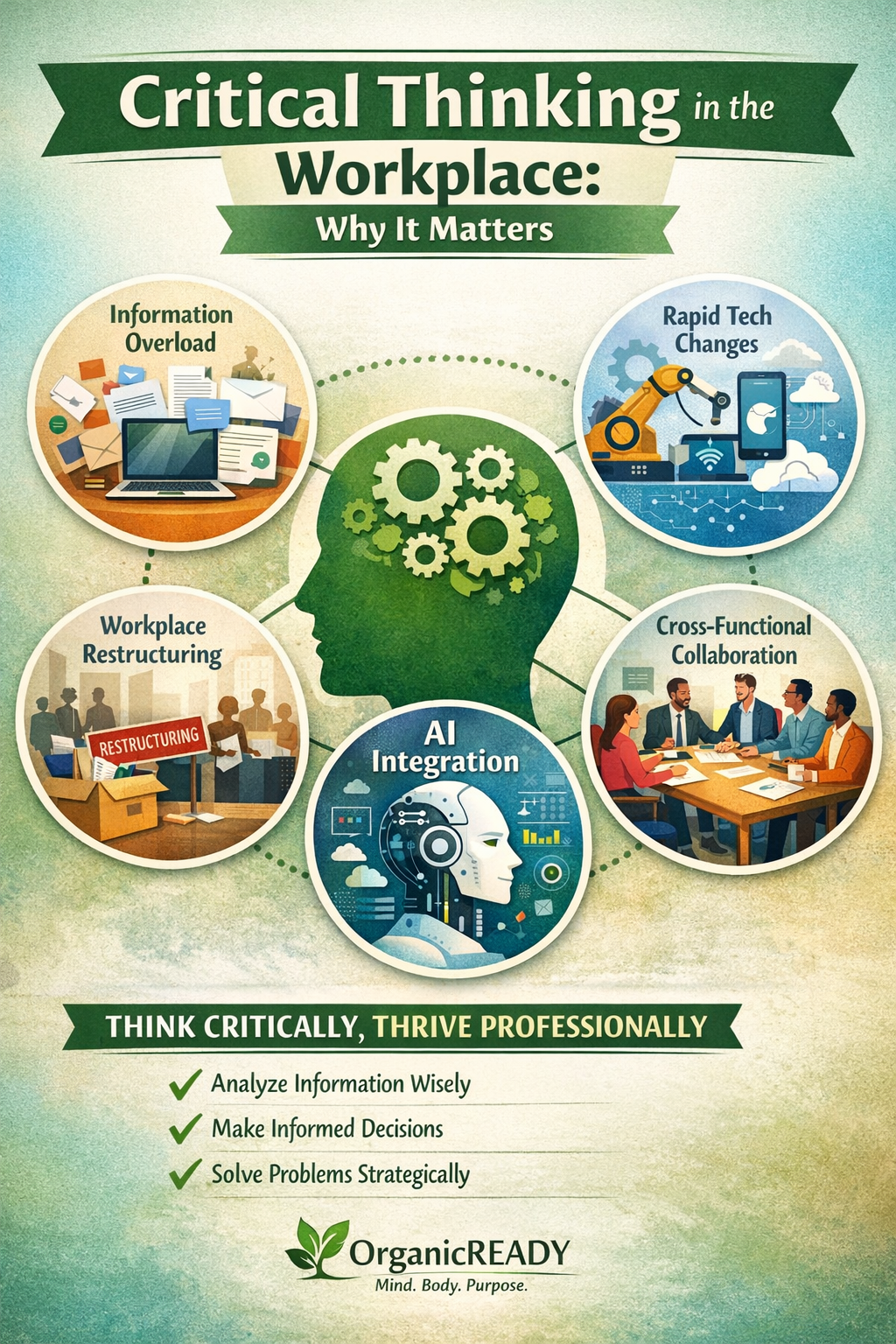
For obvious reasons, we live in a world of information overload, where emails, messages, dashboards, reports, and social media constantly compete for our attention. The challenges we’re facing are no longer how to access the information, but filtering what is accurate, relevant, and actionable without becoming distracted. At the same time, we are navigating rapid technological changes, as new systems, software platforms, and digital tools are introduced at an unprecedented pace. The change is so fast, professionals must continuously learn and adapt or risk falling behind in efficiency and competitiveness.
Welcome to the new world of AI integration, as artificial intelligence tools like Microsoft Co-Pilot or Google Gemini reshape workflows, automate tasks, and influence decision-making processes. Critical thinking is key to manipulating the world of AI. It demands stronger analytical thinking to interpret outputs, ensure accuracy, and apply human judgment.
Finally, organizations increasingly rely on cross-functional collaboration, meaning teams from different departments, expertise areas, and even geographic regions must work together toward shared goals. This requires clear communication, open-mindedness, and the ability to evaluate multiple perspectives thoughtfully. In such an environment, critical thinking is not optional; it is vital.
Professionals who cannot think critically often:
- Jump to conclusions
- Misinterpret data
- Escalate unnecessary conflicts
- Make costly mistakes
Professionals who think critically:
- Build trust
- Make strategic decisions
- Lead calmly under pressure
- Improve team performance
- Advance faster in their careers
Are you a Strong Critical Thinker?
Do you ask yourself the following questions:
Do I pause before responding to complex issues?
Do I ask clarifying questions before making assumptions?
Do I seek facts rather than rely on office gossip?
Do I evaluate long-term impact before making decisions?
Can I respectfully challenge ideas without becoming defensive?
If you answered Yes to most of these, you’re already developing this skill; if not, don’t worry. It’s learnable.
How to Strengthen Critical Thinking at Work?
1. Slow Down Your Reactions
Emotional responses weaken professional judgment. Take a breath. Ask:
What information am I missing?
2. Ask Better Questions
Instead of “Why is this happening?” ask:
- What data supports this?
- What are alternative solutions?
- What risks are involved?
- What are the long-term implications?
3. Separate Facts from Opinions
Statements like “Everyone is unhappy” are opinions.
“What evidence shows team dissatisfaction?” is critical thinking.
4. Seek Diverse Perspectives
Strong professionals invite input — especially from those who think differently.
5. Evaluate Outcomes
After completing projects, reflect:
- What worked?
- What didn’t?
- What would I improve next time?
Reflection builds wisdom.
Critical Thinking and Career Growth
Employers consistently rank critical thinking among the top professional competencies for leadership roles.
Why, because leaders are paid to:
- Solve problems
- Manage risk
- Make high-stakes decisions
- Guide others through uncertainty
If you’re aiming for a promotion, career transition, or leadership role, strengthening your thinking process is just as important as updating your resume.
The OrganicREADY Perspective
At OrganicREADY, we approach professional development the same way we approach health:
- Nourish your body.
- Strengthen your mindset.
- Elevate your skills.
- Align your purpose.
Just like organic nutrition fuels your cells, disciplined thinking fuels professional excellence.
When you cultivate critical thinking, you:
- Communicate with clarity
- Lead with confidence
- Reduce workplace stress
- Make strategic career decisions
And that is how you move from surviving at work to thriving in your career.
Ready to Elevate Your Professional Growth?
If you’re ready to prepare for a promotion, navigate workplace challenges, transition careers, or strengthen leadership skills, OrganicREADY offers career coaching and resume strategy sessions designed to sharpen your professional edge.
🌿 Book your complimentary consultation today.
Your growth is intentional. Your thinking should be too.
Discover more from OrganicREADY
Subscribe to get the latest posts sent to your email.




 OrganicREADY